

Why We Forage Ling Heather from the North York Moors
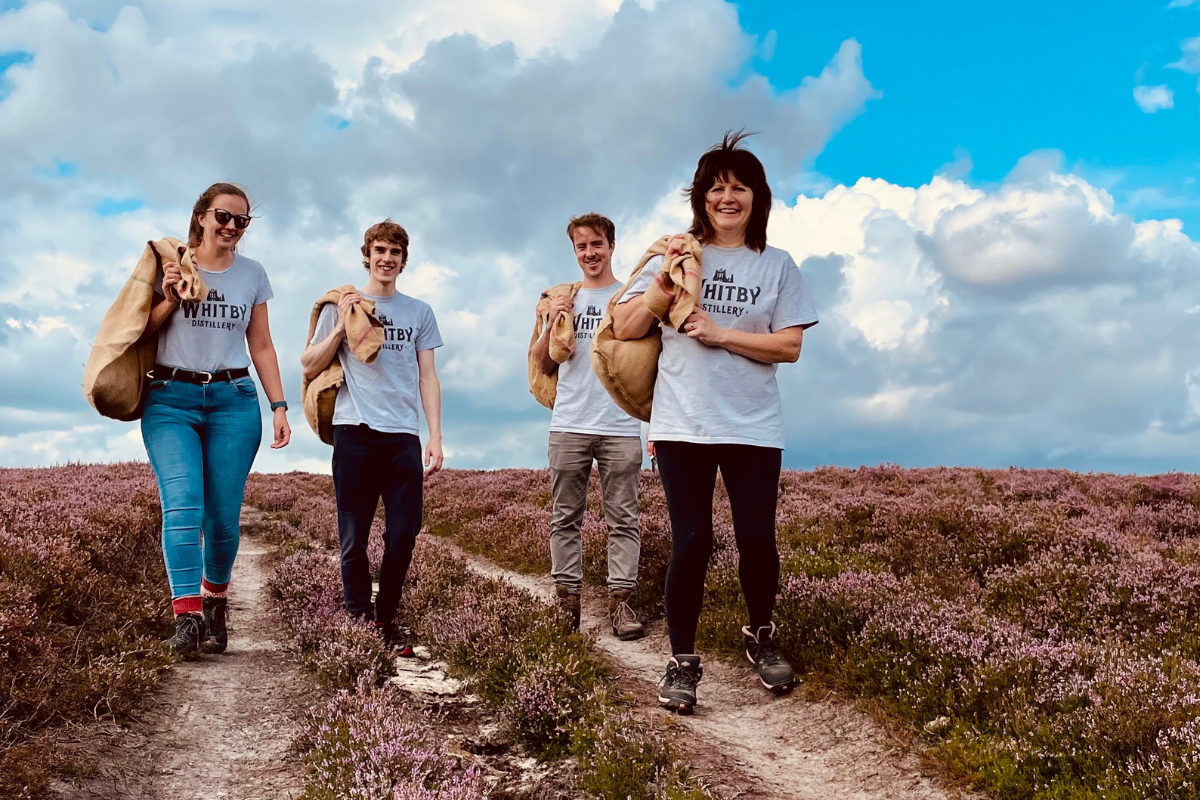
Every summer, the North York Moors turn purple as the heather comes into flower. For us, that means it’s time for the team to head onto the moors and collect one of the botanicals that gives our gin a real connection to the landscape around Whitby.
But we don’t pick just any heather, we specifically forage ling heather.
 Why ling heather?
Three main types of heather grow across the North York Moors: ling, bell heather, and cross-leaved heath, and they don’t all taste the same.
Bell heather has a stronger, more aromatic flavour, while cross-leaved heath is softer and more floral. Ling gives us what we’re looking for. A delicate, floral, and slightly earthy flavour, with a gentle bitterness that works really well in our gin.
It’s also the heather responsible for much of that famous blanket of purple across the moors in late summer.
We always forage with permission from the North York Moors National Park, and take only a very small amount from across the area we’re allowed to pick.

How do we harvest it?
We don’t pull up the whole heather plants. Instead, we snip off the flowering tops, leaving the woody plant itself rooted and growing on the moor.
Back at the distillery, the freshly-picked heather is spread across trays and left to dry. Once dry, the tiny flowers become brittle enough to separate from their woody stems. That’s when the glamorous part begins. We drag the dried heather across a mesh sieve, breaking the flowers away from the stems so the pieces we want can fall through. It’s slow, fiddly, and definitely not the most exciting distillery job!
It also turns out that freshly-picked heather contains a massive amount of spiders!
Eventually though, we’re left with the dried ling flowers ready to be used as a botanical in our gin.
Heather, honey, and the bees
We’re not the only ones interested in heather! Its late-summer flowers provide nectar for bees at a time when many other plants have finished flowering. Beekeepers even bring their hives onto the North York Moors especially for the heather bloom.
The result is heather honey, which is quite different from the golden runny honey you might have at home. Ling heather produces a thick honey with a much stronger flavour. It’s aromatic, woody, and slightly bitter. And it’s really difficult to extract from the comb without the proper equipment because of its unusual texture.
The late bloom can also mean a longer working season for the bees. Because it flowers so late, bees can continue foraging on heather when the season would normally be winding down. This gives beekeepers a few extra things to think about when preparing their colonies for winter.
Our small-scale heather picking leaves plenty for the bees too. Honeybees can forage up to around 3 miles from their hive, giving a single colony access to a huge area of moorland. The amount we need for our gin is tiny by comparison, and we only take a little from across the area we’re permitted to pick.

Why do they burn the heather?
If you’ve walked across the moors, you may have noticed dark patches amongst the purple. These aren’t necessarily the result of wildfires.
Controlled burning has traditionally been used to manage some areas of moorland. When carried out carefully and in appropriate places, it removes older vegetation, encourages fresh growth, and creates areas of heather at different stages of its life. Managed areas and firebreaks can also help break up the vegetation that could otherwise provide continuous fuel for a wildfire.
Burning isn’t appropriate everywhere, particularly on sensitive peatland. Modern moorland management can involve a combination of controlled burning, cutting vegetation, creating firebreaks, and restoring wet peatland, depending on what a particular area needs.
When fire isn’t controlled
The North York Moors wildfires of 2025 were a stark reminder of what happens when fire takes hold during prolonged dry conditions.
Dry heather, grasses, and bracken can become incredibly flammable. A wildfire doesn’t just affect the vegetation we see above ground. It can destroy wildlife habitats, damage peat, and release stored carbon, close footpaths, threaten surrounding communities, and require a huge response from firefighters and other local services.
And when the flames are finally extinguished, the job isn’t over. Damaged moorland can take years of careful restoration to recover.
Those tiny beetles everywhere?
Earlier this year, you might have noticed tiny beetles appearing absolutely everywhere. They were found on windows, outside houses, and annoyingly, all over washing left outside.
They were heather beetles (Lochmaea suturalis), a species that lives on the moors and feeds mainly on heather, particularly ling.
Every so often their numbers shoot up and huge numbers of them take to the air, which is why they suddenly start appearing away from the moors and around our homes.
They’re mostly just annoying to us, but they can cause much more damage to the heather. During a bad outbreak, their feeding can cause large patches of ling to turn brown and die back.
So those tiny beetles all over your washing weren’t random visitors. They’d most likely come from the moors.
Taking a little from a much bigger landscape
The moors aren’t simply somewhere we go to collect an ingredient. They’re home to wildlife, farmland and beekeeping, as well as being enjoyed by the people who live here, and the millions who visit every year.
That’s why we forage with permission from the North York Moors National Park, snip rather than uproot, and collect only the small amount of ling heather we actually need!
Our connection to the landscape goes beyond the botanicals we use too. The North York Moors Trust and Yorkshire Wildlife Trust are both charity partners of Whitby Distillery. Both charities do important work to protect and restore the landscapes and wildlife of North Yorkshire.
A little bit of heather comes back to the distillery with us. The rest stays on the moors, exactly where it belongs.

Leave a comment
Comments will be approved before showing up.